
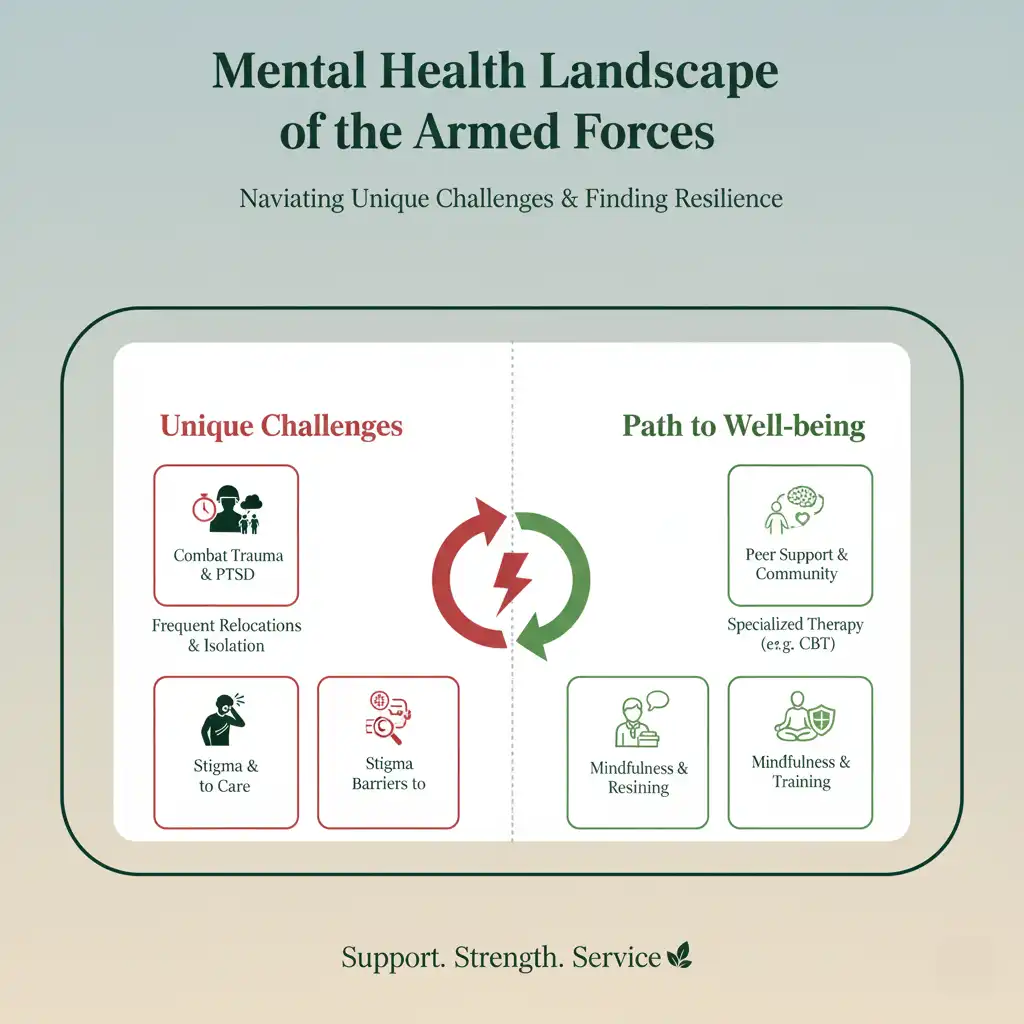
Mental Health Landscape of the Armed Forces
Serving in the Armed Forces demands exceptional resilience, courage, and dedication. However, the unique pressures and experiences inherent to military life can profoundly impact an individual’s mental well-being, both during active service and after transitioning to civilian life. It’s crucial to acknowledge that while many service personnel demonstrate remarkable strength, they are not immune to mental health challenges. These challenges are not a sign of weakness but a natural response to extraordinary circumstances.
This article aims to shed light on the mental health experiences of those who serve or have served in the military, highlighting common conditions, contributing factors, and the vital support available.
Why the Armed Forces Face Unique Mental Health Challenges
The very nature of military service exposes individuals to a range of experiences that civilian populations rarely encounter. These include:
Exposure to Trauma: Combat situations, witnessing injuries or fatalities, humanitarian disasters, and even prolonged exposure to high-stress environments can lead to psychological trauma.
Operational Stress: Extended deployments, separation from family, unpredictable schedules, and constant readiness can generate significant chronic stress.
Physical Injury and Chronic Pain: Traumatic physical injuries often come with psychological consequences, including pain management issues, mobility challenges, and associated mental distress.
Transition to Civilian Life: The shift from a highly structured military environment to civilian life can be a major challenge, leading to feelings of isolation, loss of purpose, and difficulty adjusting to new social norms and employment.
Military Culture: The strong emphasis on stoicism, self-reliance, and “macho” culture can sometimes create barriers to seeking help, as individuals may fear being perceived as weak or affecting their career progression.
Common Mental Health Conditions in the Armed Forces and Veterans
While any mental health condition can affect service personnel, certain diagnoses are more prevalent due to the unique stressors of military life.
1. Post-Traumatic Stress Disorder (PTSD)
PTSD is arguably the most recognized mental health condition linked to military service. It can develop after experiencing or witnessing a terrifying or deeply distressing event. Symptoms often include:
Flashbacks and Nightmares: Reliving the traumatic event vividly.
Avoidance: Actively steering clear of reminders of the trauma.
Hyper-arousal: Being constantly on edge, easily startled, irritable, or having difficulty sleeping.
Negative Mood and Thoughts: Feelings of guilt, shame, detachment from others, or a persistent negative view of oneself and the world.
2. Depression
Depression can manifest as persistent sadness, loss of interest in activities, fatigue, sleep disturbances, appetite changes, and feelings of worthlessness. It can be a direct response to trauma, chronic stress, or the challenges of transitioning out of service.
3. Anxiety Disorders
Beyond PTSD, other anxiety disorders such as Generalised Anxiety Disorder (GAD), panic disorder, and social anxiety can be prevalent. The constant state of alertness required in combat zones, or the stress of deployment, can contribute to chronic anxiety that persists long after the immediate threat has passed.
4. Adjustment Disorders
These conditions arise when an individual struggles to cope with a significant life change or stressor. For military personnel, this often relates to the challenges of deployment, injury, or the difficult transition back to civilian life. Symptoms might include sadness, hopelessness, anxiety, irritability, or difficulty sleeping and concentrating.
5. Alcohol and Substance Misuse
As a coping mechanism, some individuals may turn to alcohol or drugs to self-medicate the symptoms of underlying mental health conditions like PTSD, depression, or anxiety. This can lead to addiction and complicate recovery.
6. Complex Trauma (C-PTSD)
For those exposed to prolonged or repeated trauma, such as sustained combat exposure or difficult deployments over many years, Complex PTSD may develop. This often involves deeper impacts on identity, emotional regulation, relationships, and self-perception, beyond the core symptoms of single-incident PTSD.
Breaking the Silence: The Importance of Seeking Help
There is a growing recognition within the military and wider society that seeking mental health support is a sign of strength, not weakness. Early intervention is key to effective recovery and preventing conditions from becoming chronic.
Where to Find Support: Dedicated Services and Resources
A range of specialized services exists to support active service personnel, reservists, veterans, and their families.
For Those Still Serving:
-
Medical Officers/Base Healthcare: The first point of contact for any health concerns, including mental health.
-
Unit Welfare Officers: Offer pastoral care and support for personnel and their families.
-
Military Mental Health Services: Dedicated in-service mental health professionals who can provide assessment and treatment.
For Veterans and Their Families:
-
NHS Veterans’ Mental Health Services (e.g., Veterans’ Mental Health and Wellbeing Service, Op COURAGE): Specialized NHS services designed to meet the unique needs of veterans, offering assessment, treatment, and ongoing support.
-
Charitable Organizations: Numerous charities provide crucial mental health support, peer networks, and practical assistance. Examples include:
-
Combat Stress: Provides specialist treatment and support for veterans with mental health problems.
-
Help for Heroes: Offers extensive support for wounded, injured, and sick service personnel and veterans, including psychological well-being.
-
The Royal British Legion: Provides welfare and support, including mental health guidance.
-
SSAFA (Soldiers’, Sailors’ and Airmen’s Families Association): Offers practical, financial, and emotional support to service personnel, veterans, and their families.
-
Samaritans: A 24/7 confidential helpline available to anyone struggling with their mental health, including those in the Armed Forces community.
-
-
GP (General Practitioner): Your local GP can provide initial assessment and refer you to appropriate veteran-specific or mainstream mental health services. It’s important to mention your veteran status to ensure you receive the most relevant support.
A Collective Responsibility
Supporting the mental health of our Armed Forces and veterans is a collective responsibility. By increasing awareness, reducing stigma, and ensuring accessible, high-quality support services, we can help those who have served our country to lead healthy, fulfilling lives. If you, or someone you know, is struggling, please reach out. You are not alone.