
Body Image and Its Impact on Mental Health
Body image is about much more than just what you see in the mirror. It encompasses how you think and feel about your appearance, how you judge your own worth, and how you believe others perceive you.
Our relationship with our bodies is complex and constantly shifting. While it is normal to have days where you feel less confident, persistent negative body image can significantly impact your mental well-being. Understanding how these feelings develop is the first step toward building a healthier relationship with yourself.
What is Body Image?
Simply put, body image refers to your personal perspective of your physical self. It isn’t fixed; it changes throughout your life based on your experiences, environment, and emotions.
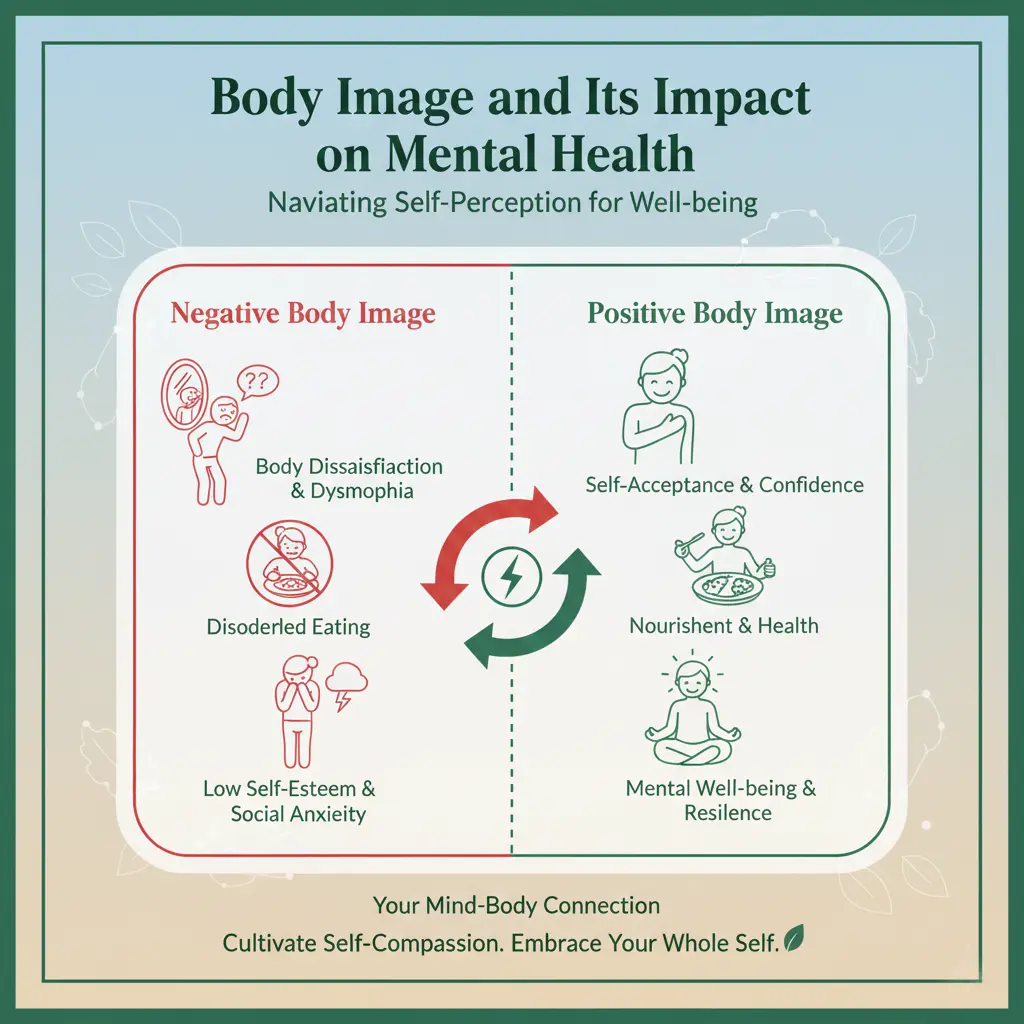
Positive body image: This doesn’t mean thinking your body is perfect. It means accepting your body, respecting what it does for you, and not letting your appearance define your self-worth.
Negative body image: This involves feeling dissatisfied, ashamed, or self-critical about your body. It can lead to a distortion in how you see yourself, often magnifying perceived “flaws.”
How Does Body Image Affect Mental Health?
There is a strong link between body image and mental health. When we constantly compare ourselves to unrealistic standards, we set ourselves up for disappointment. This “striving for perfection” can lead to feelings of inadequacy.
While dissatisfaction with your appearance isn’t a mental illness on its own, it is a major risk factor for developing broader mental health issues, including:
Anxiety and Depression: Feeling low or anxious about how you look.
Eating Disorders: Conditions like anorexia or bulimia often stem from deep-rooted body image issues.
Body Dysmorphic Disorder (BDD): A condition where someone becomes obsessed with imagined or minor defects in their appearance, severely affecting their daily life.
Research indicates that a significant portion of adults feel “down” or “ashamed” due to their body image, highlighting that this is a widespread issue affecting people of all ages, genders, and backgrounds.
What Causes Body Image Concerns?
No single factor causes someone to develop a negative view of their body. It is usually a combination of personal and environmental influences.
Social Media and Culture
We are bombarded daily with images of “ideal” bodies on social media, TV, and in magazines. These images are often edited or curated, presenting a standard of beauty that is physically impossible for most people to achieve. This pressure to conform can be a major trigger for body dissatisfaction.
Family and Peers
The people around us shape our views. If family members or friends frequently criticize their own bodies or comment negatively on yours, it can teach you to view yourself through a critical lens.
Life Changes and Trauma
Puberty, pregnancy, menopause, or physical illness can change how we look and feel. Additionally, past bullying or trauma regarding appearance can leave lasting emotional scars.
How to Improve Body Image
Improving how you feel about your body is a journey, but there are practical steps you can take to foster a more positive outlook.
Curate Your Feed: Unfollow social media accounts that make you feel bad about yourself. Follow diverse accounts that celebrate different body types.
Focus on Function: Remind yourself of what your body does rather than just how it looks. It allows you to breathe, move, laugh, and hug loved ones.
Practice Self-Compassion: Treat yourself with the same kindness you would offer a friend. If you wouldn’t say it to them, don’t say it to yourself.
Seek Support: If your feelings about your body are interfering with your life, talking to a therapist or counselor can be incredibly helpful.
If you or someone you know is struggling with eating disorders or intense distress regarding appearance, professional support services like Beat or the NHS can provide guidance.