
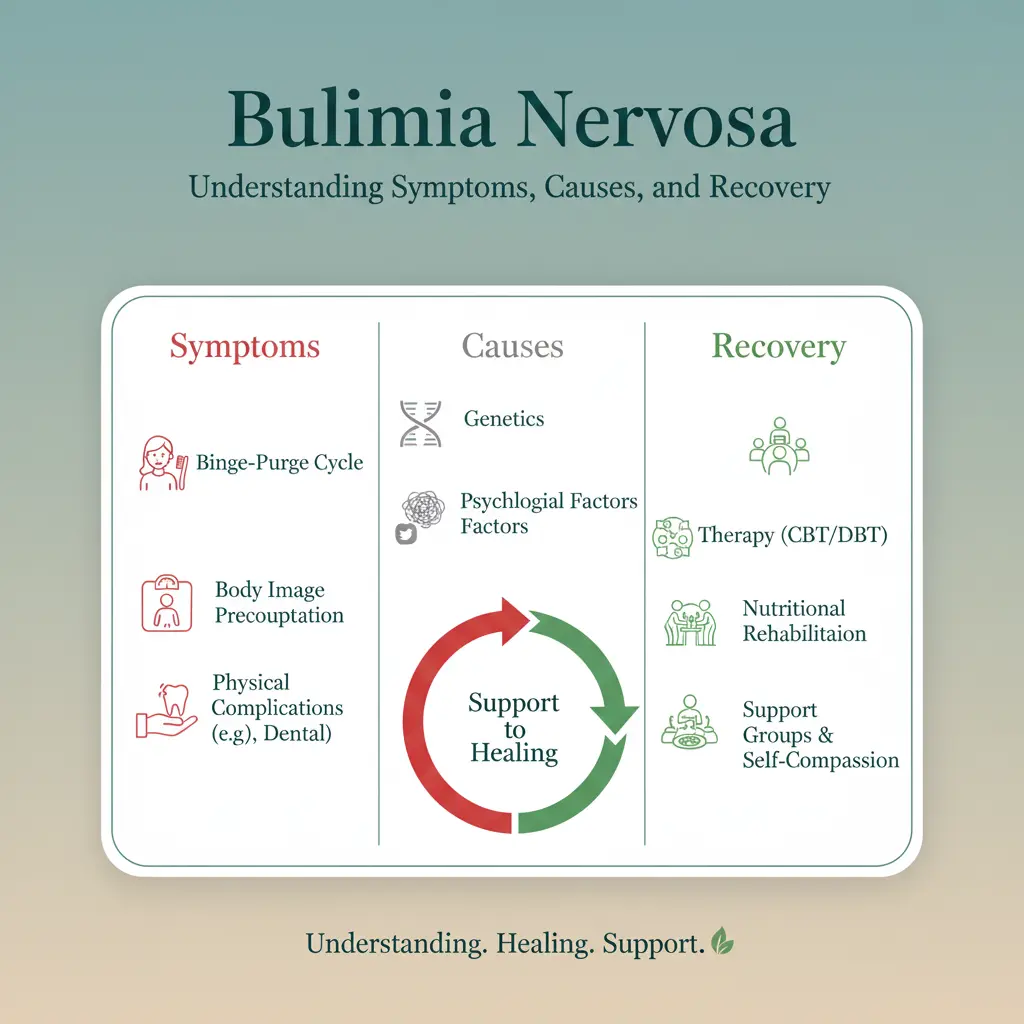
Bulimia nervosa, often simply called bulimia, is a severe mental health condition and eating disorder. It is characterized by a distressing cycle of bingeing (eating large amounts of food) and then purging (trying to rid the body of that food). While it is most commonly diagnosed in young people aged 13 to 17, it can affect anyone at any age.
For many, this condition is less about food and more about emotional control. Recognizing the signs of this eating disorder is the first step toward breaking the cycle and finding a path to recovery.
Recognizing Bulimia Symptoms
Because individuals often hide their behaviors due to shame or guilt, identifying the condition can be difficult. Symptoms affect the mind, body, and behavior.
Emotional and Behavioral Signs
Loss of Control: A feeling that you cannot stop eating during a binge.
Preoccupation with Weight: Obsessing over body shape or size, often believing you are larger than you are.
Secrecy: Hoarding food, eating in private, or disappearing to the bathroom immediately after meals.
Mood Swings: Feeling anxious, depressed, irritable, or numb.
Purging Behaviors: Vomiting, excessive exercise, or using laxatives to “compensate” for eating.
Physical Signs
Weight Fluctuations: Frequent changes in weight, though many people with bulimia maintain an average weight.
Digestive Issues: Bloating, constipation, and stomach pain.
Dental Problems: Damaged teeth, gum disease, or a sore throat caused by stomach acid from vomiting.
Swelling: Puffy face, hands, or feet.
Fatigue: Feeling constantly tired or lethargic.
What Causes Bulimia?
There is no single cause for bulimia nervosa. It is usually a combination of biological, psychological, and social factors.
Emotional Distress: Stress, trauma, or low self-esteem can trigger bingeing as a coping mechanism.
Genetics: A family history of eating disorders or mental health issues may increase risk.
Societal Pressure: Cultural emphasis on thinness and “perfection” can contribute to body dissatisfaction.
Personality Traits: Perfectionism, fear of rejection, or a strong need for approval are common traits.
The Health Risks of Bulimia
Ignoring the symptoms of bulimia can lead to serious long-term health consequences. Frequent vomiting can erode dental enamel and damage the throat. Misusing laxatives can result in chronic digestive problems like Irritable Bowel Syndrome (IBS) and heart complications due to electrolyte imbalances. Early intervention is crucial to prevent permanent damage.
Treatment and Getting Help
Recovery is possible, and you do not have to face it alone. If you suspect you or a loved one is struggling, the first step is speaking to a GP. They can assess your physical health and refer you to specialist eating disorder services.
Common Treatment Options
Guided Self-Help: Structured programs, often including a workbook and therapist support, to help you understand triggers and plan meals.
Cognitive Behavioural Therapy (CBT): A leading therapy for bulimia treatment, CBT helps you change negative thought patterns about food and body image.
Interpersonal Therapy (IPT): Focuses on improving relationships and social functioning to reduce emotional distress.
Medication: Antidepressants may be prescribed alongside therapy to help manage underlying depression or anxiety.
In severe cases, or if there is a significant physical risk, hospital admission may be necessary to stabilize health.
Self-Care and Support
Recovering takes time. Alongside professional help, try to:
Join a Support Group: Sharing experiences with others can reduce feelings of isolation. Organizations like Beat offer online communities.
Identify Triggers: Learn what emotions lead to a binge and find alternative coping strategies.
Be Kind to Yourself: Focus on small steps and celebrate progress, no matter how small.