
Cognitive Behavioural Therapy, widely known as CBT, is a practical and structured form of talking therapy that helps people manage their problems by changing the way they think and behave.
Unlike some therapies that delve deeply into the past, Cognitive Behavioural Therapy (CBT) focuses largely on the “here and now.” It offers tools to break the cycle of negative thinking that often fuels mental health issues, helping you feel better by altering how you process and react to the world around you.
How Does CBT Work?
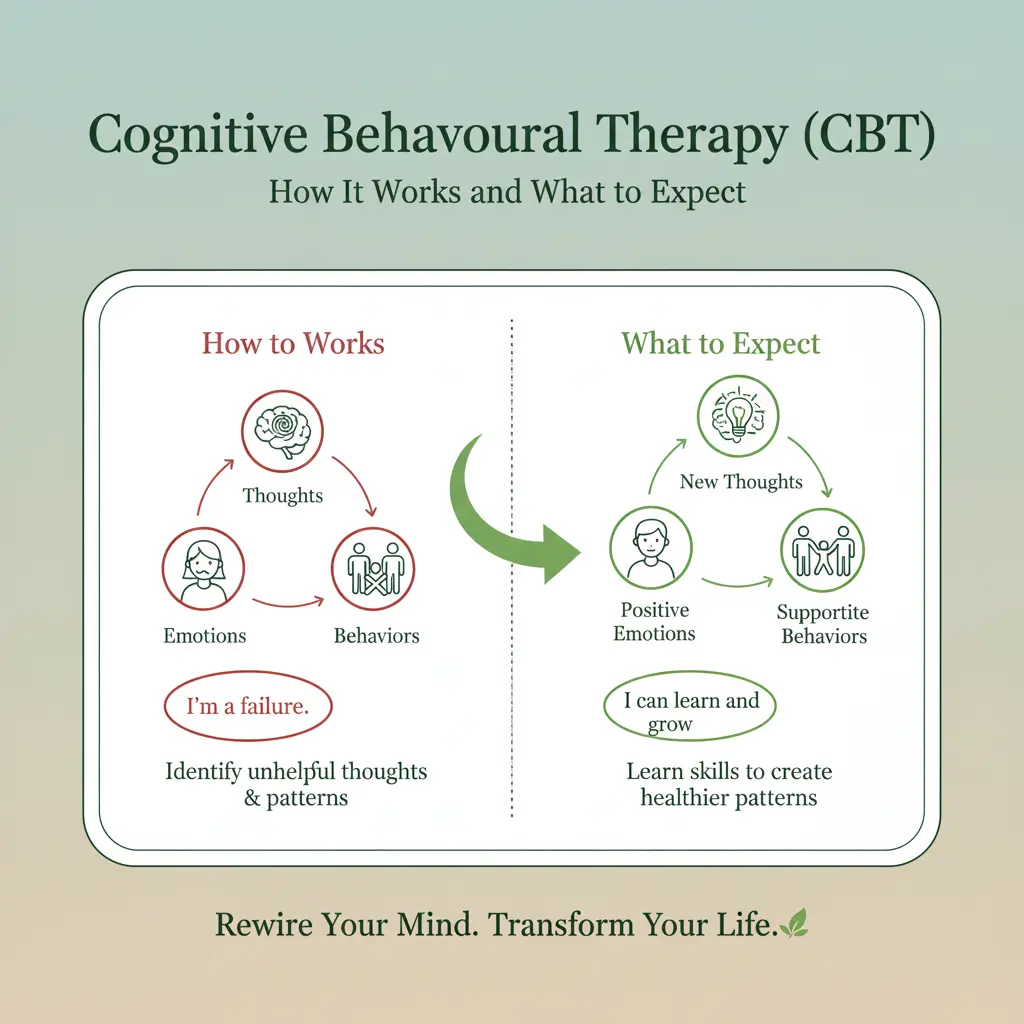
The core concept of CBT is that our thoughts, feelings, physical sensations, and actions are interconnected. When we experience distress, we often fall into negative patterns that trap us in a vicious cycle.
For example, if you are feeling low, you might think, “I’m no good at this.” This thought can lead to feelings of hopelessness, which might make you withdraw from social activities. This withdrawal then reinforces the original negative thought.
CBT therapy aims to stop this cycle by:
Breaking down overwhelming problems into smaller parts.
Identifying negative thinking patterns.
Replacing unhelpful behaviors with practical coping strategies.
What Makes CBT Different?
CBT is distinct from other forms of talking therapies because of its structured and active nature. It is generally:
Short-term: Courses often range from 6 to 20 sessions.
Goal-oriented: You and your therapist work on specific issues rather than general feelings.
Action-based: It involves “homework” between sessions, such as keeping a mood diary or practicing new skills.
Structured: Sessions follow a clear agenda to ensure progress.
What Happens in a CBT Session?
While every therapist is different, CBT sessions usually follow a predictable pattern to maximize their effectiveness.
Review: You will discuss how you got on with the tasks from the previous session.
Agenda Setting: You and your therapist agree on what to focus on for the current session.
Exploration: Using exercises like role-play or worksheets, you will explore specific thoughts and behaviors.
Planning: You will agree on new tasks to try before the next meeting, such as testing a fear or changing a routine.
Your therapist works collaboratively with you, never forcing you to do things you aren’t ready for.
What Can CBT Treat?
CBT is one of the most effective treatments for anxiety and depression, but its applications are broad. It is recommended for:
Depression and Anxiety Disorders
Obsessive-Compulsive Disorder (OCD)
Post-Traumatic Stress Disorder (PTSD)
Eating Disorders
Panic Attacks and Phobias
It can also support people with long-term physical health conditions, such as chronic fatigue syndrome or IBS, by helping them cope better with symptoms.
Accessing CBT
If you think this therapy might be right for you, there are several ways to access it.
NHS Services: You can often self-refer to NHS psychological therapies (IAPT) or ask your GP for a referral.
Private Therapy: Many private therapists specialize in CBT.
Online CBT: Digital programs and self-help books are increasingly popular and effective options.