
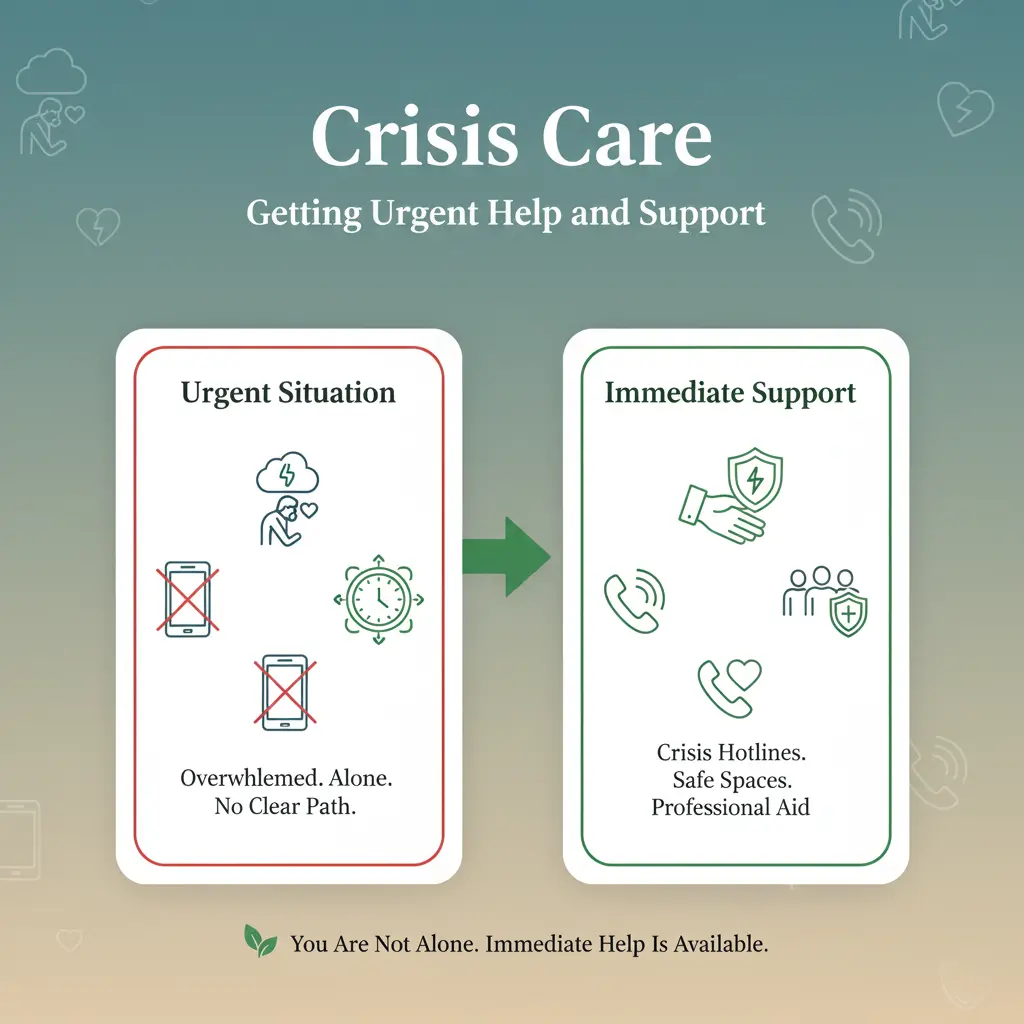
A mental health crisis is when you reach a breaking point and need urgent help. This can happen to anyone, whether you have experienced mental health problems before or if this is the first time you are feeling this way.
You might be feeling intense anxiety, experiencing panic attacks, having suicidal thoughts, or feeling the urge to self-harm. No matter what you are going through, remember that you are not wasting anyone’s time by asking for support. Help is available, and you deserve to feel safe.
Signs of a Mental Health Crisis
Recognizing the signs early can help you get the support you need. A crisis can look different for everyone, but common signs include:
Intense feelings of distress or hopelessness.
Thinking about hurting yourself or suicide.
Experiencing hallucinations (hearing or seeing things others don’t).
Feeling manic (extremely high energy) or out of control.
Severe panic attacks that feel unmanageable.
How to Get Urgent Help
If you or someone you know is in crisis, there are several ways to access urgent mental health help.
Immediate Emergency Support
If you have hurt yourself or are at immediate risk of taking your own life:
Call 999 for an ambulance.
Go straight to your nearest A&E department.
Urgent NHS Mental Health Support
If you need help urgently but are not in immediate physical danger:
Call 111: The NHS 111 service can advise you on the right support, including booking emergency GP appointments.
Contact Your GP: Ask for an emergency appointment.
NHS Urgent Mental Health Helpline: If you live in England, you can find a local 24-hour helpline for support.
Crisis Resolution Teams (CRHT)
If you are already under the care of a community mental health team, you should have a specific number to call for your local Crisis Resolution and Home Treatment (CRHT) team. They provide intensive support to help you stay at home rather than going to a hospital.
Helplines for Emotional Support
Sometimes, talking to someone can help defuse a crisis.
Samaritans: Call 116 123 for free, 24/7 confidential support.
Shout: Text “SHOUT” to 85258 for text-based support.
Lifeline (Northern Ireland): Call 0808 808 8000.
Planning Ahead for a Crisis
If you have experienced a crisis before, creating a mental health safety plan can be a powerful tool. This plan outlines what to do if you start feeling unwell again.
Advance Statements: A written document explaining how you wish to be treated if you become too unwell to communicate your decisions.
Crisis Cards: A small card to carry in your wallet with key contacts and instructions for others on how to help you.
Safety Plans: A step-by-step guide on coping strategies and people to contact when suicidal thoughts arise.
Supporting Someone in Crisis
Seeing a loved one in distress can be frightening, but your support matters.
Stay Calm: Your calmness can help reduce their anxiety.
Listen: Let them talk without judgment.
Take Action: If you believe they are in danger, do not leave them alone. Call 999 or take them to A&E.