
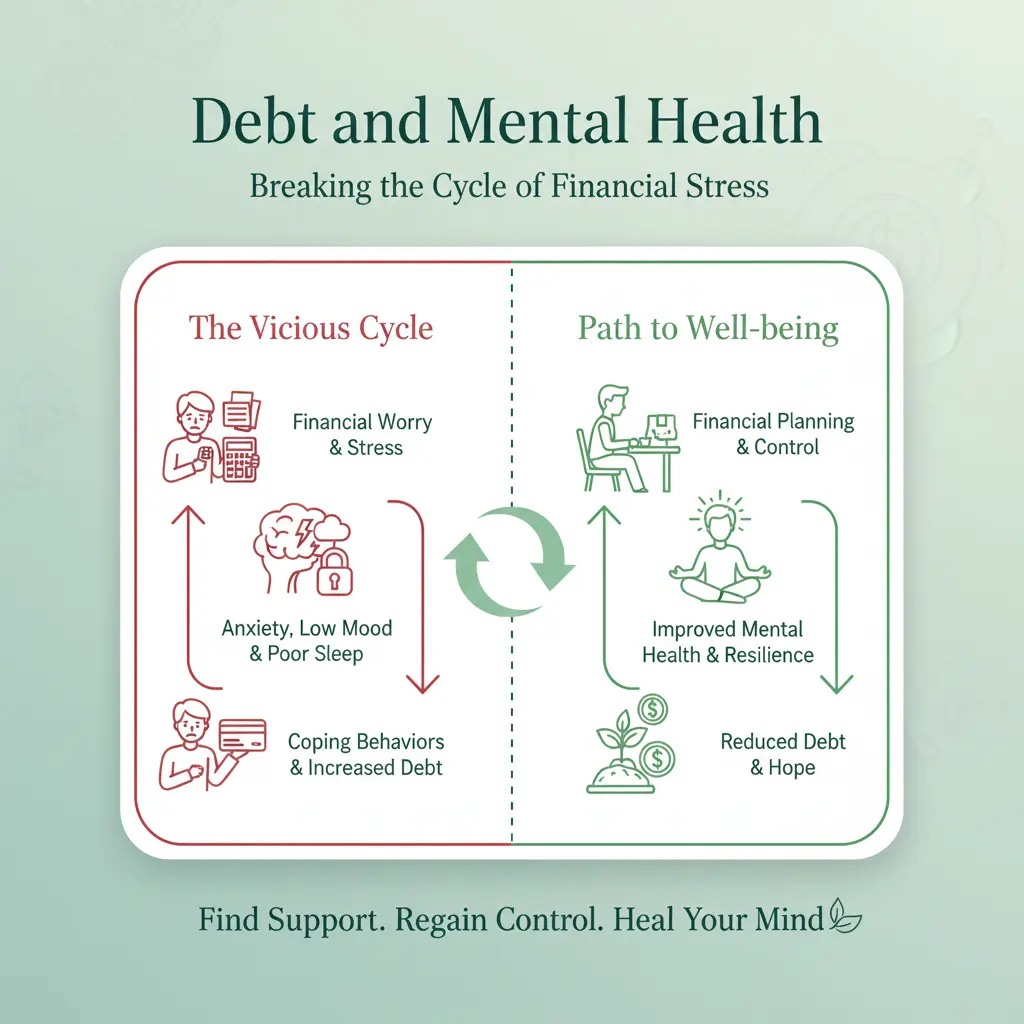
There is a powerful link between debt and mental health. Financial difficulties can be a significant source of stress, while existing mental health problems can make earning and managing money much harder.
Understanding this connection is the first step toward breaking the cycle. Whether you are struggling with financial stress or finding it hard to manage bills due to your mental wellbeing, knowing that support is available can make a huge difference.
The Link Between Money and Mental Health
It is a common misconception that debt is always the result of overspending. In reality, debt and mental health problems often stem from life events outside our control, such as redundancy, bereavement, or long-term illness.
This relationship often works as a cycle:
Mental health affects finances: Conditions like depression can zap your motivation to manage bills, while mania might lead to impulsive spending.
Debt affects mental health: The pressure of owing money can trigger anxiety, disrupt sleep, and lead to feelings of hopelessness.
Research suggests that half of all adults with a debt problem also experience mental ill-health. You are not alone in this struggle.
Signs You May Have a Debt Problem
Recognizing the warning signs early can help you take control before the situation worsens. Ask yourself:
Do you feel anxious or physically sick when thinking about money?
Are you ignoring letters from creditors or avoiding phone calls?
Do you routinely miss minimum payments on rent or credit cards?
Is it impossible to save for emergencies?
If you answered “yes” to these questions, it may be time to seek debt help.
How Mental Health Impacts Financial Decisions
Your mental state can directly influence how you handle money.
Low Motivation: Depression may make it feel impossible to open mail or contact the bank.
Impulsive Decisions: During manic episodes, you might spend money you don’t have.
Mental Capacity: Conditions like dementia or severe mental illness can affect your ability to make informed financial decisions. In these cases, you may need someone to act on your behalf.
Getting Help and Managing Debt Stress
If you are worried about money and mental health, the most important thing to do is reach out. You do not have to face this alone.
Speak to a Debt Advisor
Organizations like StepChange, National Debtline, and Citizens Advice offer free, non-judgmental support. They can help you create a budget and negotiate with creditors.
Utilize the “Breathing Space” Scheme
In the UK, the Breathing Space scheme can freeze interest and enforcement action from creditors for up to 60 days while you get advice. If you are receiving mental health crisis treatment, this protection can last as long as your treatment plus 30 days.
Use a Mental Health Evidence Form
You can ask a healthcare professional to complete a Mental Health Evidence Form. This document helps creditors understand your situation, often leading them to adjust their collection processes or communication style to better support you.