
The Power of Kindness: How Helping Others Boosts Mental Health
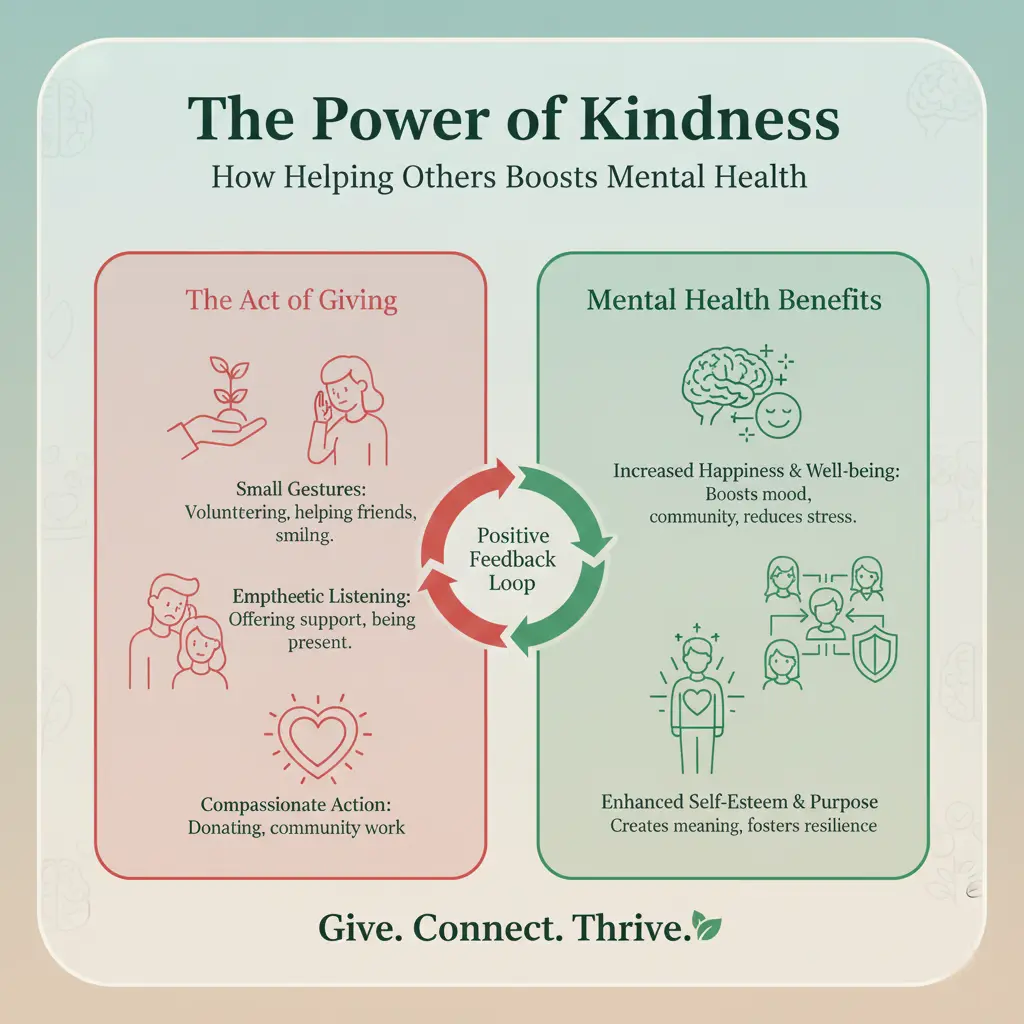
Kindness is often seen as a simple virtue, but it is actually a powerful tool for improving our mental well-being. Research shows that being kind—whether to a friend, a stranger, or yourself—creates a positive feedback loop that benefits everyone involved.
At its core, kindness and mental health are deeply connected. It is an antidote to isolation and a proven way to reduce stress. When we act with genuine care for others, we don’t just make their day better; we actively protect our own mental stability.
The Science of Kindness: What Happens in the Brain?
Have you ever felt a warm glow after doing a good deed? That isn’t just a feeling; it is a chemical reaction. When you perform an act of kindness, your brain undergoes physical changes that boost your mood.
The “Helper’s High”
Psychologists call this rush of good feelings the “helper’s high.” It is driven by powerful neurotransmitters:
Dopamine: Responsible for pleasure and reward.
Serotonin: Regulates mood and sleep.
Oxytocin: Often called the “love hormone,” it reduces blood pressure and promotes trust and social bonding.
By lowering cortisol (the stress hormone), kindness effectively acts as a natural anxiety reducer. Studies have shown that people who volunteer or regularly help others often have lower rates of depression and greater life satisfaction.
Benefits of Kindness for Mental Well-being
The benefits of kindness extend far beyond a momentary mood boost. It builds the emotional resilience needed to cope with life’s challenges.
Combats Isolation: Loneliness is a significant factor in poor mental health. Kindness creates a sense of belonging and strengthens relationships.
Provides Perspective: Helping those in need can help you gain a new perspective on your own life, often fostering a sense of gratitude.
Boosts Self-Esteem: Doing good makes you feel capable and valuable. It reinforces the idea that you have something positive to contribute to the world.
Simple Ways to Practice Random Acts of Kindness
You don’t need grand gestures or money to make a difference. Small, random acts of kindness can have a ripple effect.
Reach Out: Send a text to a friend you haven’t spoken to in a while just to check in.
Listen: Give someone your full attention without interrupting or checking your phone.
Offer Support: Ask a colleague if they need help with a task or offer to run an errand for a neighbor.
Volunteer: Dedicate time to a local charity or community group.
Say Thank You: Expressing gratitude to service workers, friends, or family members strengthens bonds.
Don’t Forget Self-Kindness
We are often our own harshest critics. It is vital to remember that self-kindness is just as important as being kind to others.
If you are struggling, try to treat yourself with the same compassion you would offer a friend. This might mean taking a break when you are tired, forgiving yourself for a mistake, or simply allowing yourself to say “no” when you are overwhelmed. Prioritizing your own well-being is not selfish; it is necessary.
Global Resources:
Random Acts of Kindness Foundation: Inspiration and resources for spreading kindness globally.
Mayo Clinic: Kindness: The physiological benefits of being kind.
Action for Happiness: A movement of people committed to building a happier and more caring society.