
Menopause and Mental Health: Managing the Emotional Transition
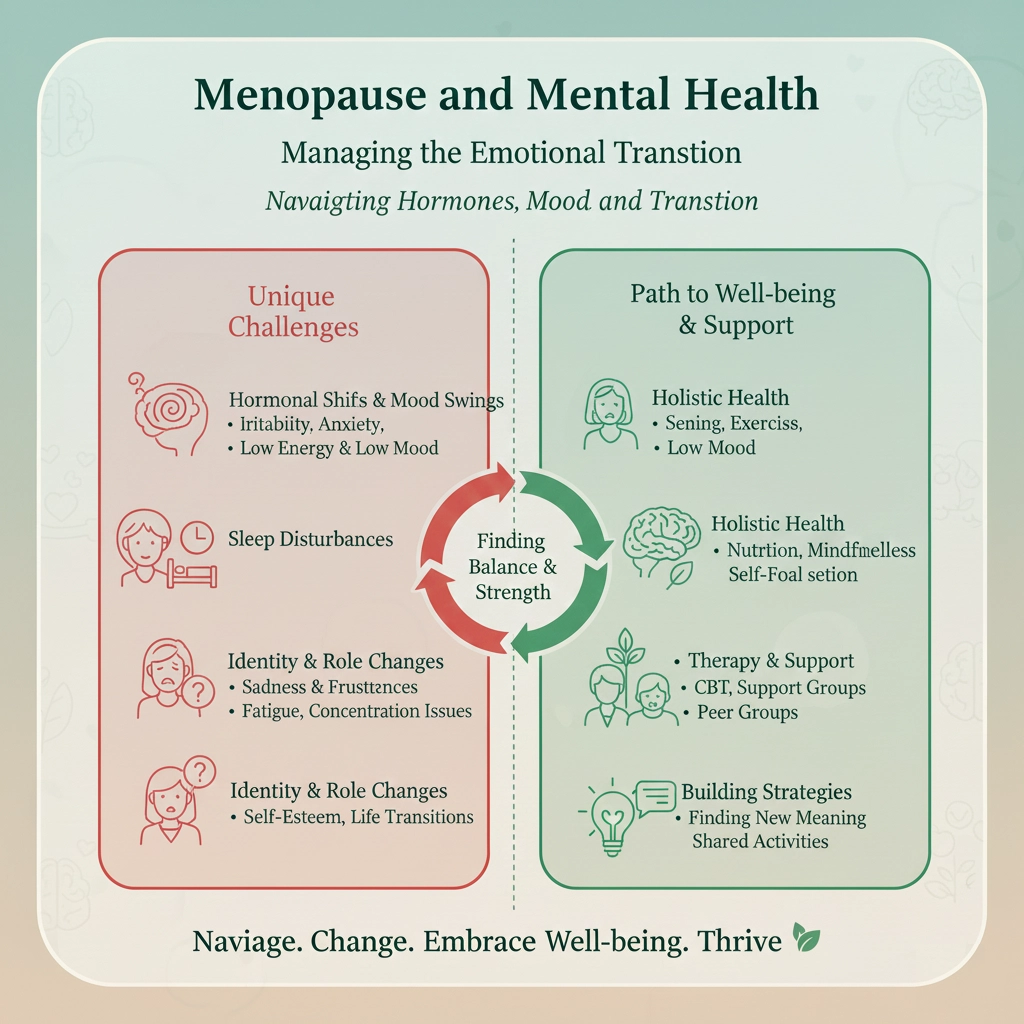
Menopause is a natural biological process that marks the end of menstrual cycles. While it is often discussed in terms of physical symptoms like hot flashes, the impact of menopause and mental health is just as significant.
For many women, the hormonal shifts that occur during perimenopause (the transition period before menopause) can trigger anxiety, low mood, and “brain fog.” Understanding these changes is crucial for navigating this life stage with confidence and well-being.
What is Happening to My Body?
Menopause officially occurs when you have not had a menstrual period for 12 months, typically happening between the ages of 45 and 55. However, the symptoms often begin years earlier during perimenopause.
During this time, your ovaries gradually produce less estrogen and progesterone. These hormones do not just regulate your period; they also protect your brain and mood. When their levels drop, it can leave you feeling vulnerable to stress and emotional instability.
Common Mental Health Symptoms
The emotional impact of menopause varies from person to person. While some breeze through it, others find their mental health significantly challenged. Common symptoms include:
Anxiety and Panic Attacks: Sudden feelings of nervousness or impending doom, often without a clear trigger.
Depression and Low Mood: Persistent sadness, loss of interest in hobbies, or feeling tearful.
Brain Fog: Difficulty concentrating, forgetfulness, or feeling like your mind is “cloudy.”
Irritability: Feeling shorter-tempered than usual with family or colleagues.
Sleep Disruption: Insomnia caused by night sweats can worsen all other mental health symptoms.
Managing Menopause and Mental Health
You do not have to “just put up with” these symptoms. There are effective treatments and lifestyle changes that can help you feel like yourself again.
1. Hormone Replacement Therapy (HRT)
HRT is often the most effective treatment for menopausal symptoms. By topping up your estrogen levels, it can stabilize your mood and relieve physical symptoms like hot flashes.
Note: Talk to your healthcare provider about the benefits and risks to see if it is right for you.
2. Cognitive Behavioural Therapy (CBT)
CBT is a type of talking therapy that is proven to help with low mood and anxiety during menopause. It teaches you practical coping strategies to manage negative thoughts and can even help reduce the distress of hot flashes.
3. Lifestyle Changes
Prioritize Sleep: Create a cool, dark sleeping environment to combat night sweats.
Move Your Body: Regular exercise boosts natural mood-enhancing chemicals (endorphins).
Limit Stimulants: Reducing caffeine and alcohol can help lower anxiety levels and improve sleep quality.
Finding Support
If you are struggling, reach out. You are not alone in this transition.
North American Menopause Society (NAMS): Expert advice and a practitioner finder for the US and Canada.
International Menopause Society (IMS): Global resources and news on menopausal health.
The Menopause Charity (UK): Fact sheets and support for women navigating menopause.
Australasian Menopause Society: Information and doctor finder for Australia and NZ.