
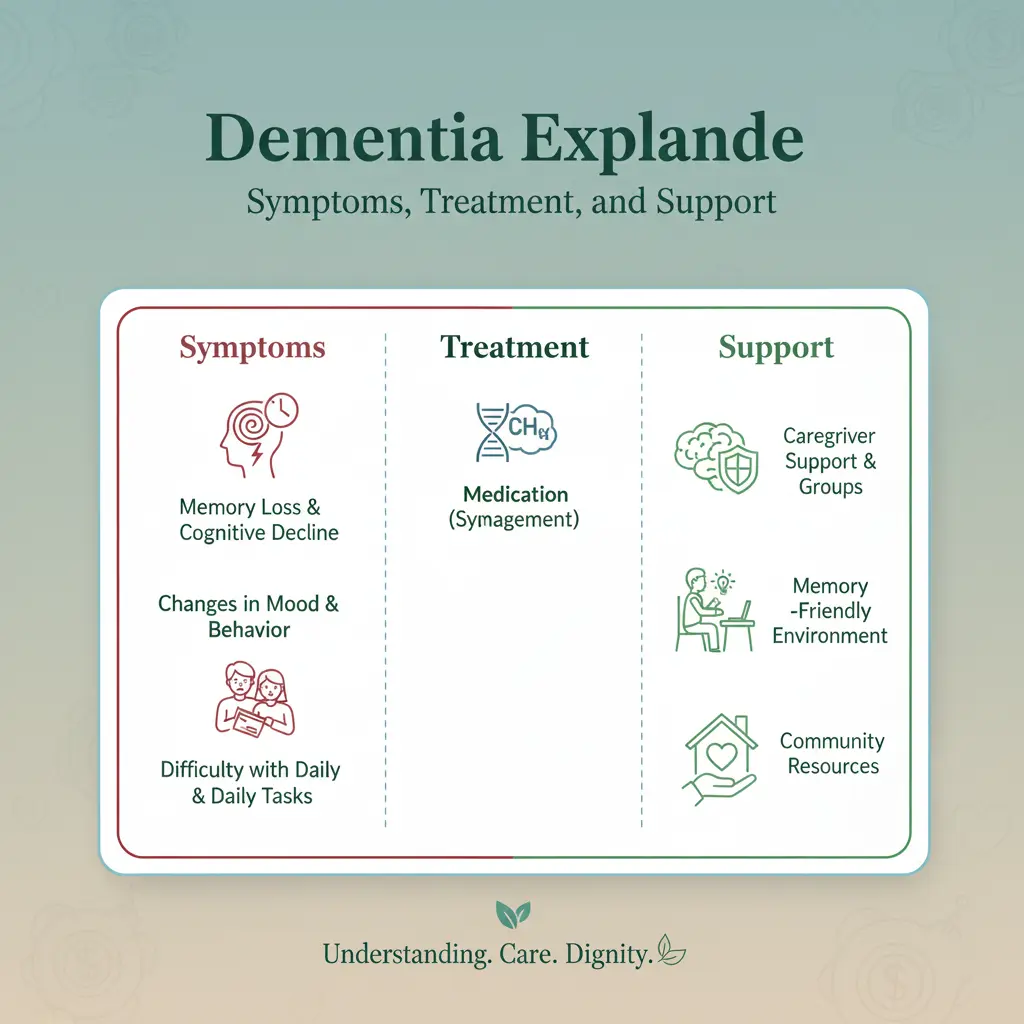
Dementia is not a single disease, but an umbrella term describing a range of conditions that affect the brain. It occurs when brain cells are damaged by diseases such as Alzheimer’s or a series of strokes. While it is most common in people over 65, it is not a normal part of ageing.
Receiving a diagnosis, or caring for someone who has, can be an emotional experience. You may feel shock, fear, or sadness. However, understanding the condition and accessing the right support can help you navigate this journey.
What Are the Symptoms of Dementia?
Dementia affects everyone differently, but symptoms typically worsen over time. It is crucial to distinguish these signs from normal ageing or other treatable conditions like depression, dehydration, or infections.
Common symptoms of dementia include:
-
Memory Loss: Struggling to remember recent events or new information.
-
Cognitive Difficulties: Trouble concentrating, planning, or organizing daily tasks.
-
Communication Issues: Finding it hard to follow conversations or find the right words.
-
Visual Perception Problems: Difficulty judging distances or seeing objects in three dimensions.
-
Disorientation: Getting lost in familiar places or losing track of dates.
Mood changes are also common. A person may become irritable, anxious, or depressed. In later stages, physical symptoms like muscle weakness or changes in sleep and appetite may develop.
Is It Dementia or Depression?
Dementia and depression often share symptoms, such as poor concentration and withdrawal from social activities. This can make diagnosis tricky. However, there are key differences:
-
Timeline: Depression often develops quickly (weeks/months), while dementia is slower.
-
Memory: A person with depression may forget details but remember them when prompted. Someone with dementia is unlikely to recall the memory even with prompts.
-
Orientation: Not knowing where you are or what time it is is common in dementia but rare in depression.
If you are unsure, speak to your GP to ensure you get the correct treatment.
Treatment and Living Well with Dementia
While there is currently no cure, various treatments can help manage symptoms and improve quality of life.
Medical and Therapeutic Support
-
Medication: Can help slow the progression of symptoms in some cases.
-
Talking Therapies: Such as Cognitive Behavioural Therapy (CBT), which can help manage anxiety or depression associated with the condition.
-
Cognitive Stimulation Therapy: Activities designed to keep the mind active.
-
Alternative Therapies: Music therapy, aromatherapy, and reminiscence work can be soothing and engaging.
Reducing Your Risk
Age is the biggest risk factor, but lifestyle changes can help lower the risk of developing dementia.
-
Stay Active: Regular physical exercise helps maintain blood flow to the brain.
-
Eat Well: A balanced diet supports overall brain health.
-
Socialize: Keeping socially active by seeing friends or volunteering protects against isolation.
-
Challenge Your Brain: Reading, puzzles, and learning new skills build “cognitive reserve.”
Finding Support
If you or a loved one has been diagnosed, you do not have to face it alone. Organizations like Alzheimer’s Society and Dementia UK offer specialized advice and support networks.