
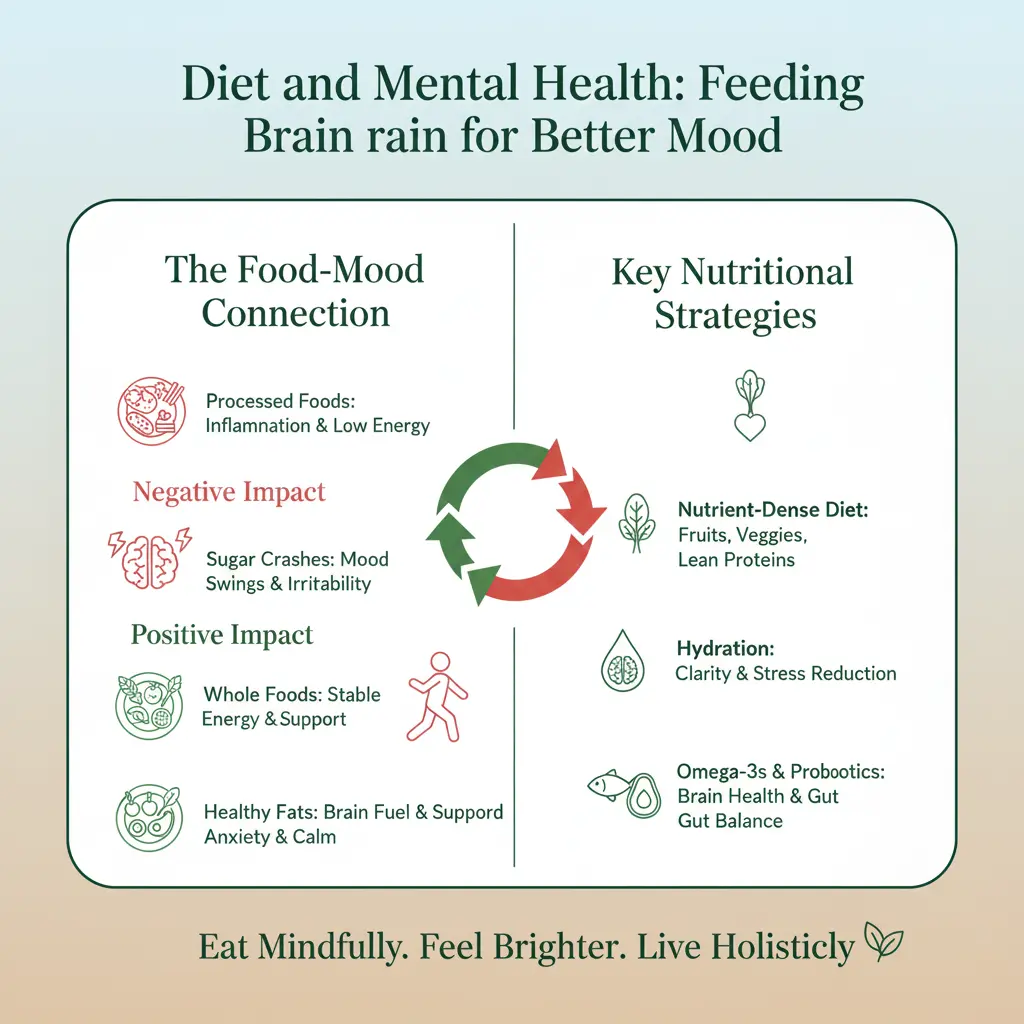
The connection between what you eat and how you feel is powerful. While diet alone cannot cure mental health conditions, a growing body of research shows that good nutrition is a vital tool for managing your mental well-being.
Your brain works 24/7, even while you sleep, and it requires a constant supply of fuel. That “fuel” comes from the foods you eat, and what’s in that fuel makes all the difference.
The Gut-Brain Connection: Your “Second Brain”
Have you ever had a “gut feeling” or felt “butterflies” in your stomach when nervous? This is the gut-brain axis in action.
Your gastrointestinal tract is lined with a hundred million nerve cells and produces 95% of your body’s serotonin, the neurotransmitter that regulates sleep, appetite, and mood. Because of this close relationship, your gut is often called your “second brain.”
When your gut is healthy, you are better equipped to handle stress and regulate your emotions. Conversely, an unhealthy gut environment—often caused by highly processed diets—can lead to inflammation that may contribute to anxiety and depression.
Foods That Support Mental Health
To support a healthy gut and a happy brain, focus on whole, nutrient-dense foods. Research consistently supports the Mediterranean diet as a gold standard for mental wellness.
1. Healthy Fats
Your brain is about 60% fat, so it needs “good” fats to function well.
Omega-3 Fatty Acids: Found in oily fish (salmon, mackerel, sardines), walnuts, flaxseeds, and chia seeds. These are essential for brain health and may reduce symptoms of depression.
Monounsaturated Fats: Found in avocados and olive oil.
2. Fermented Foods
Probiotics found in fermented foods help maintain a healthy gut microbiome.
Eat: Yogurt, kefir, kimchi, sauerkraut, and kombucha.
3. Complex Carbohydrates
Unlike sugary snacks that cause energy crashes, complex carbs release glucose slowly, helping to stabilize your mood.
Eat: Oats, brown rice, quinoa, beans, and sweet potatoes.
4. Colorful Fruits and Vegetables
These are packed with antioxidants that protect your brain from oxidative stress.
Eat: Berries, leafy greens (spinach, kale), peppers, and broccoli.
Foods to Limit: The Impact of Ultra-Processed Foods
Recent global studies highlight a concerning link between ultra-processed foods (UPFs) and poor mental health. Foods high in refined sugars, artificial additives, and unhealthy fats can spike blood sugar and trigger inflammation.
Limit: Sugary drinks, packaged snacks, fast food, and sweets.
Caffeine: While a morning coffee is fine for most, excess caffeine can trigger anxiety and disrupt sleep. Be mindful of how it affects you.
Practical Tips for Mindful Eating
Improving your diet for mental health isn’t about strict rules; it’s about making small, sustainable changes.
Eat Regularly: Skipping meals can cause blood sugar drops, leading to irritability and fatigue (often called being “hangry”).
Stay Hydrated: Even mild dehydration can affect your concentration and mood.
Share Meals: Across many cultures, eating together is a time for connection. Sharing a meal can lower stress and boost feelings of belonging.
Listen to Your Body: Pay attention to how different foods make you feel physically and emotionally.
A Note on Eating Disorders
While nutrition is important, it is vital to maintain a healthy relationship with food. If you find yourself becoming obsessive about what you eat, or if food is a source of guilt, shame, or anxiety, please seek professional support.
References & Further Reading:
World Health Organization (WHO): Mental Disorders – Global overview of mental health statistics.
Harvard Health: The Gut-Brain Connection – Detailed explanation of how the gut impacts mood.
Mayo Clinic: Maximizing Memory with Diet – Insights into brain-healthy foods.