
Drugs and mental health
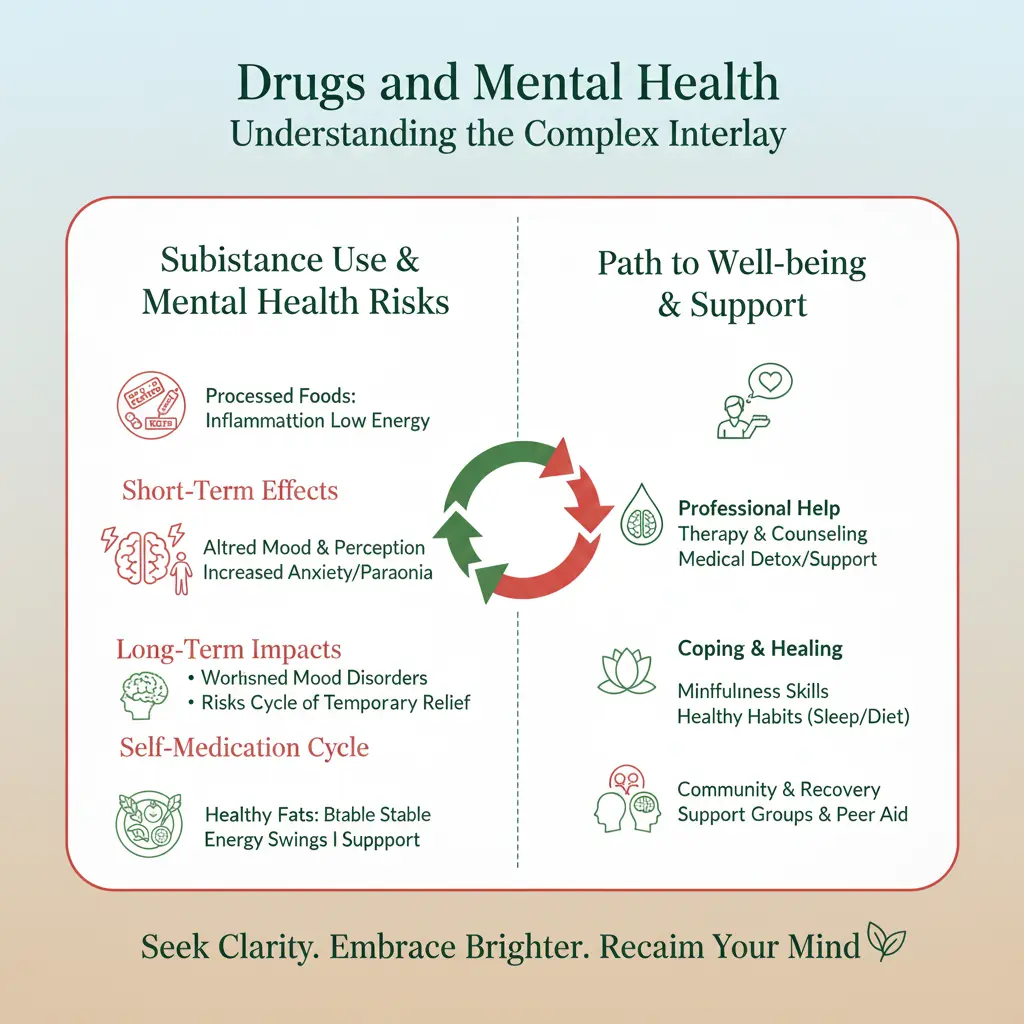
The relationship between drugs and mental health is complex. While some people use recreational drugs to cope with difficult feelings, the substances themselves can often trigger or worsen mental health problems.
Understanding how drugs affect the mind is crucial, whether you are worried about your own use or concerned for a friend. It is important to know that you are not alone, and non-judgmental support is available globally.
The “Chicken and Egg” Relationship
It is often difficult to tell which came first: the drug use or the mental health issue. They frequently feed into each other in a cycle known as comorbidity or dual diagnosis.
-
Self-Medication: Many people use drugs (including alcohol, cannabis, or prescription meds) to numb feelings of anxiety, depression, or stress. While this might offer temporary relief, it often leads to long-term dependency and worsens the original symptoms.
-
Drug-Induced Issues: Regular use of certain substances can alter brain chemistry, directly causing anxiety, paranoia, or depression in people who have never experienced them before.
What is Dual Diagnosis?
Dual diagnosis is a term used when someone has both a severe mental health condition and a substance misuse problem.
Managing both conditions simultaneously is vital. Historically, services treated them separately, but modern healthcare guidelines (such as those from NICE in the UK) state that mental health services should support you even if you are using drugs. Treatment often involves a mix of talking therapies, such as Cognitive Behavioural Therapy (CBT), and support from addiction specialists.
How Different Drugs Affect Your Mind
Different types of drugs carry different risks for your mental well-being.
Stimulants (e.g., Cocaine, Ecstasy/MDMA, Amphetamines)
These drugs speed up messages in the brain, making you feel energetic or confident.
-
The Come-Down: As the drug wears off, it can leave you feeling depressed, anxious, or paranoid.
-
Long-term Risks: Heavy use is linked to drug-induced psychosis (losing touch with reality) and the recurrence of schizophrenia. Ecstasy use can specifically impact memory function.
Depressants (e.g., Alcohol, Cannabis, Benzodiazepines)
These slow down the brain’s functions.
-
Cannabis: Regular use is strongly linked to increased risks of anxiety and depression. High-potency cannabis (often called “skunk”) is associated with an increased risk of psychosis and schizophrenia, particularly in young people.
-
Risks: Reliance on these to “switch off” can prevent you from learning healthy coping mechanisms for stress.
Hallucinogens (e.g., Magic Mushrooms, LSD)
These alter your perception of reality.
-
The Trip: A “bad trip” can cause terrifying flashbacks and feelings of detachment that persist long after the drug has left your system. This can be particularly dangerous for those with a history of mental health issues.
Breaking the Cycle and Getting Help
Admitting that drug use is affecting your life is a brave first step. Recovery is possible, and professional support can help you regain control.
-
Be Honest: Doctors need to know what you are taking to help you safely. Patient confidentiality rules generally protect this information.
-
Seek Integrated Care: If you have a dual diagnosis, ask your provider for a care plan that addresses both the mental health and substance use together.
-
Harm Reduction: If you aren’t ready to stop completely, look for harm reduction services that can help you stay safer.
Global Support Resources
-
Frank (UK): Honest information about drugs and local support services.
-
NIDA (USA): The National Institute on Drug Abuse offers extensive research and resources.
-
Narcotics Anonymous (International): A global community-based organization for recovery support.
-
Mind (UK): Detailed advice on the mental health impacts of specific substances.