
Gambling and Mental Health: Breaking the Cycle of Addiction
Gambling can start as a bit of fun—a flutter on a sports game or a night at the casino. However, for many, it can quickly spiral into a “hidden addiction” that devastates finances, relationships, and emotional well-being.
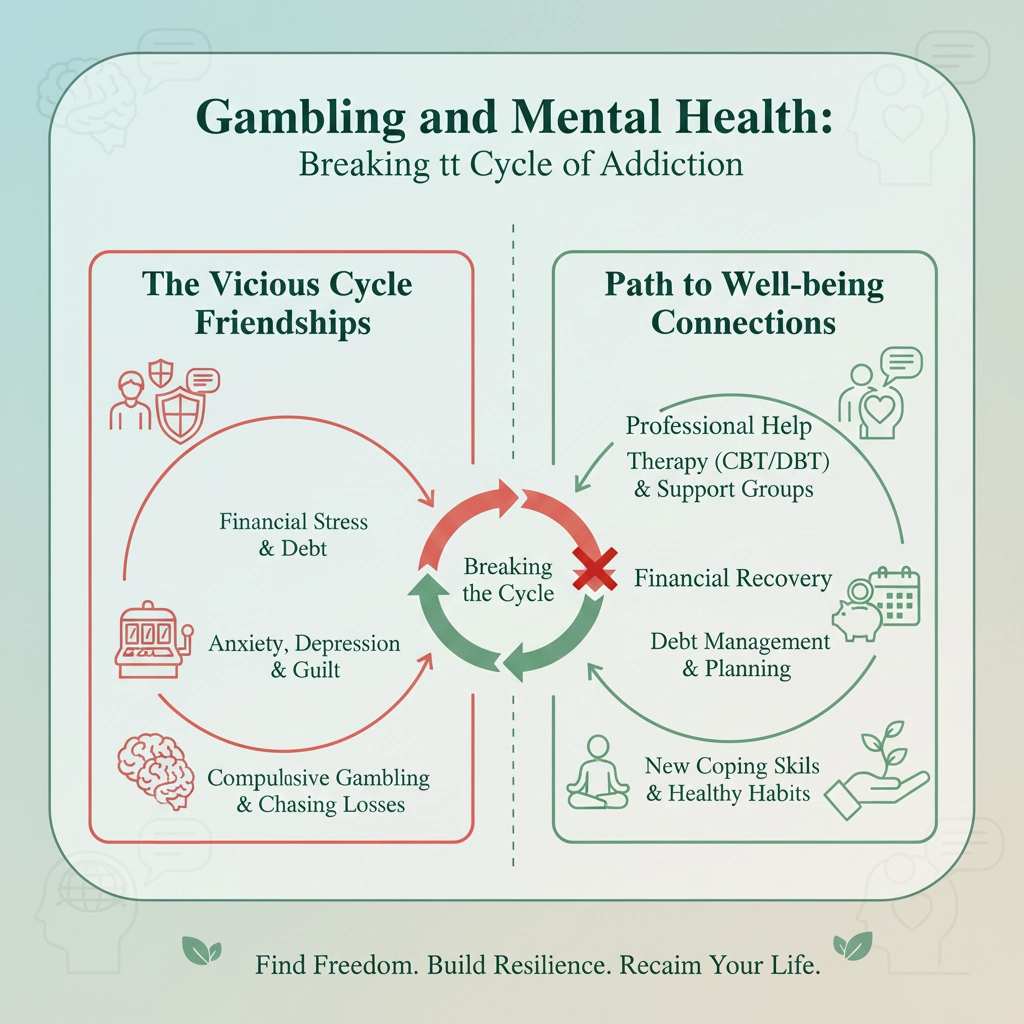
The link between gambling and mental health is often a vicious cycle. People may gamble to escape stress or depression, but the gambling itself leads to debt and anxiety, which in turn fuels the urge to gamble more. Breaking this cycle is possible, but it requires understanding the triggers and seeking the right support.
What is Problem Gambling?
Problem gambling, also known as compulsive gambling or gambling disorder, occurs when the urge to gamble becomes uncontrollable. It is not just about losing money; it is about the impact on your life and the lives of those around you.
Signs You May Have a Gambling Problem
If you are unsure whether your habit has crossed the line into addiction, look for these warning signs:
Chasing Losses: Trying to win back money you have lost by gambling more.
Preoccupation: Constantly thinking about your next bet.
Escapism: Gambling to avoid dealing with problems or feelings of helplessness, guilt, or anxiety.
Secrecy: Lying to friends and family about how much time or money you spend betting.
Financial Strain: Borrowing money, selling possessions, or stealing to fund the addiction.
How Gambling Affects Your Mental Health
Gambling alters brain chemistry. The thrill of a win releases dopamine (the “feel-good” chemical), similar to the effects of drugs or alcohol. Over time, your brain relies on gambling to feel this reward, making everyday activities seem dull.
The Mental Health Impact
Anxiety and Stress: The pressure of debt and secrecy can lead to constant worry and panic attacks.
Depression: The “come down” after a loss often leads to intense feelings of shame and hopelessness.
Suicide Risk: There is a worrying link between severe gambling addiction and suicidal thoughts. If you feel unsafe, please contact emergency services immediately.
Why Do People Get Addicted?
There is no single cause, but several risk factors contribute to gambling addiction:
Biological: Some people are naturally more impulsive or prone to addiction.
Environmental: Exposure to gambling at a young age or pressure from friends.
Psychological: High levels of stress, boredom, or existing mental health conditions like ADHD or bipolar disorder can increase risk.
Treatment and Self-Help Strategies
Recovery is a journey, but you do not have to walk it alone. There are effective treatments and practical steps you can take today.
Professional Treatment
Cognitive Behavioural Therapy (CBT): This therapy helps you identify the thought patterns that lead to betting (e.g., the “gambler’s fallacy” that a win is due) and replaces them with healthier behaviors.
Support Groups: Organizations like Gamblers Anonymous use a 12-step recovery program that has helped millions worldwide.
Practical Steps to Stop Gambling
Self-Exclusion: Most gambling websites and casinos allow you to voluntarily ban yourself from their services.
Blocking Software: Install software like Gamban on your devices to block access to betting sites.
Hand Over Control: Ask a trusted family member to manage your finances temporarily to remove the temptation.
Supporting a Loved One
If you suspect a friend or family member is struggling, approach them with empathy rather than judgment. Let them know you are there to support them in seeking help. Remember to protect your own finances and mental well-being during this process.
Global Resources:
GamCare (UK): Leading provider of information and support for anyone affected by problem gambling.
National Council on Problem Gambling (USA): A national advocate for programs and services to assist problem gamblers.
Gambling Therapy (International): Free online support for anyone affected by problem gambling globally.
Mayo Clinic: Compulsive Gambling: Detailed medical overview of symptoms and causes.