
Hearing Voices: Understanding, Coping, and Support
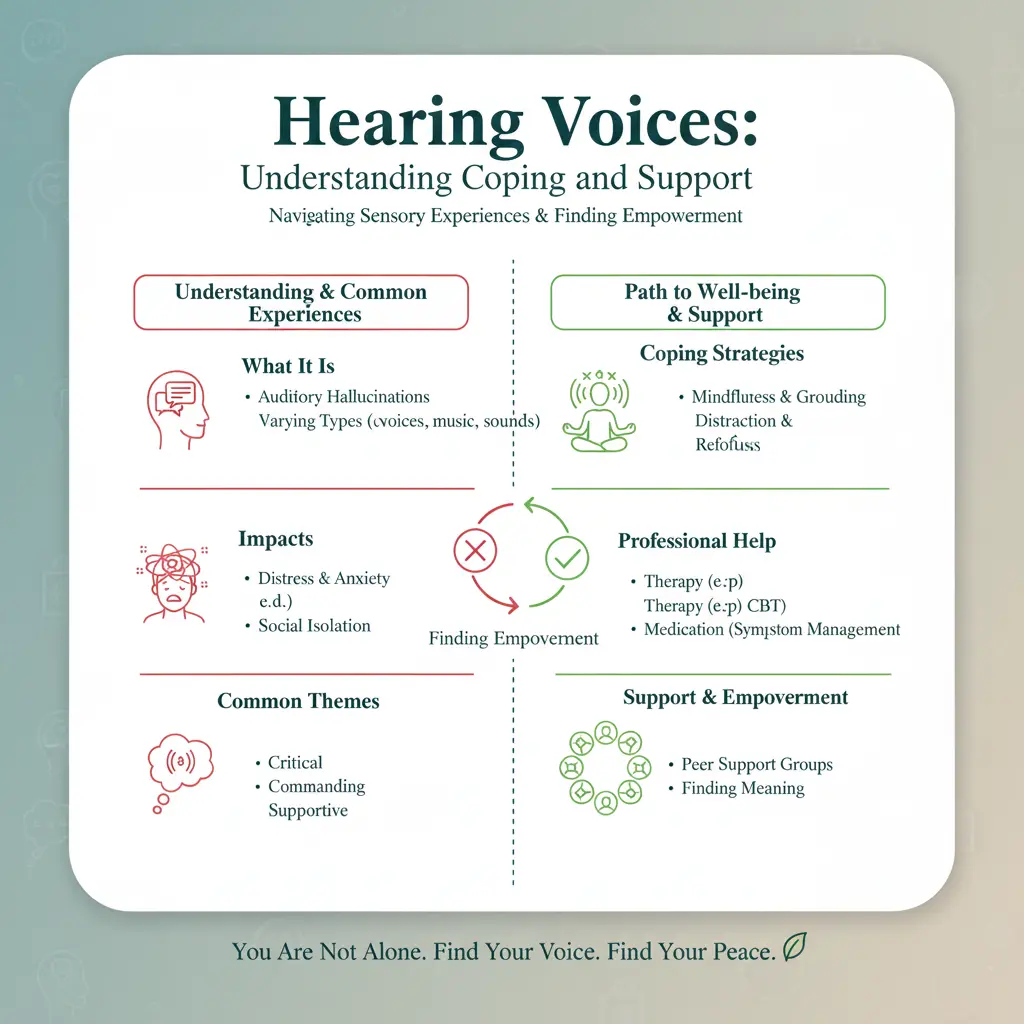
Hearing voices—also known as auditory hallucinations—is a surprisingly common experience. While it is often associated with mental health conditions like schizophrenia, many people who hear voices do not have a mental illness.
The experience is unique for everyone. Voices can be friendly, neutral, or distressing. They might be familiar or unknown, whisper or shout, and happen occasionally or constantly. Regardless of the nature of the voices, it is important to know that you are not alone, and there are many ways to manage them.
Why Do People Hear Voices?
There is no single cause for hearing voices. It is often a complex mix of biological, psychological, and environmental factors.
Mental Health Conditions: Conditions such as schizophrenia, bipolar disorder, severe depression, and psychosis are common causes.
Traumatic Life Events: Abuse, neglect, or the loss of a loved one can trigger voices as a way for the mind to cope with intense emotions.
Stress and Anxiety: High levels of stress or anxiety can cause the brain to misinterpret internal thoughts as external sounds.
Sleep Problems: Severe lack of sleep or conditions like narcolepsy can lead to hallucinations.
Physical Health: High fevers, infections, migraines, and thyroid issues can sometimes be the cause.
Substance Use: Alcohol, recreational drugs, and withdrawal from certain medications can trigger auditory hallucinations.
Coping Strategies for Hearing Voices
If the voices are distressing or interfering with your daily life, there are practical techniques you can try to regain control.
1. Engagement and Dialogue
Instead of fearing the voices, some people find it helpful to change their relationship with them.
Set Boundaries: Tell the voices you will only listen to them at a specific time of day (e.g., for 15 minutes at 6 PM).
Stand Up to Them: If voices are critical, practice standing up to them as you would a bully. Remind yourself that they cannot hurt you.
Negotiate: If a voice commands you to do something unsafe, firmly refuse or negotiate a safer alternative.
2. Distraction and Focus
Shift your attention away from the voices to break their hold on you.
Listen to Music: Using headphones to listen to music or an audiobook can drown out the voices.
Grounding Techniques: Focus on the physical world. Count five things you can see, four you can touch, and so on.
Creative Outlets: Drawing, writing, or playing an instrument can channel your focus elsewhere.
3. Identify Patterns
Keep a diary to track when the voices occur. You might notice they happen when you are tired, hungry, or stressed. Identifying these triggers for hearing voices can help you manage your environment to reduce episodes.
Treatment and Professional Support
If coping strategies aren’t enough, professional support can be life-changing.
Talking Therapies:
CBT (Cognitive Behavioural Therapy): Helps you change the way you think and react to the voices, reducing their power over you.
Compassion-Focused Therapy: Teaches you to treat yourself—and sometimes the voices—with kindness rather than fear.
Medication: Antipsychotic medication can help quiet the voices or make you feel calmer about them.
Peer Support Groups: connecting with others who have similar experiences can be incredibly validating. The Hearing Voices Network runs groups globally where you can share strategies without judgment.
How to Support Someone Who Hears Voices
If a friend or family member confides in you:
Listen without Judgment: Accept their experience as real to them. Do not dismiss it or argue that the voices aren’t there.
Ask About the Voices: Ask what the voices are saying and how it makes them feel. This can help them feel less isolated.
Focus on Distress: You may not be able to stop the voices, but you can help with the anxiety or fear they cause.
Global Resources:
Intervoice (International): The international network for the hearing voices movement, connecting people and ideas worldwide.
Hearing Voices Network (UK): Information, support, and a directory of local groups across the UK.
Hearing Voices Network (USA): Support and resources for voice hearers in the United States.
Mind (UK): comprehensive guide on living with voices.