
Housing and Mental Health: Why Your Home Matters
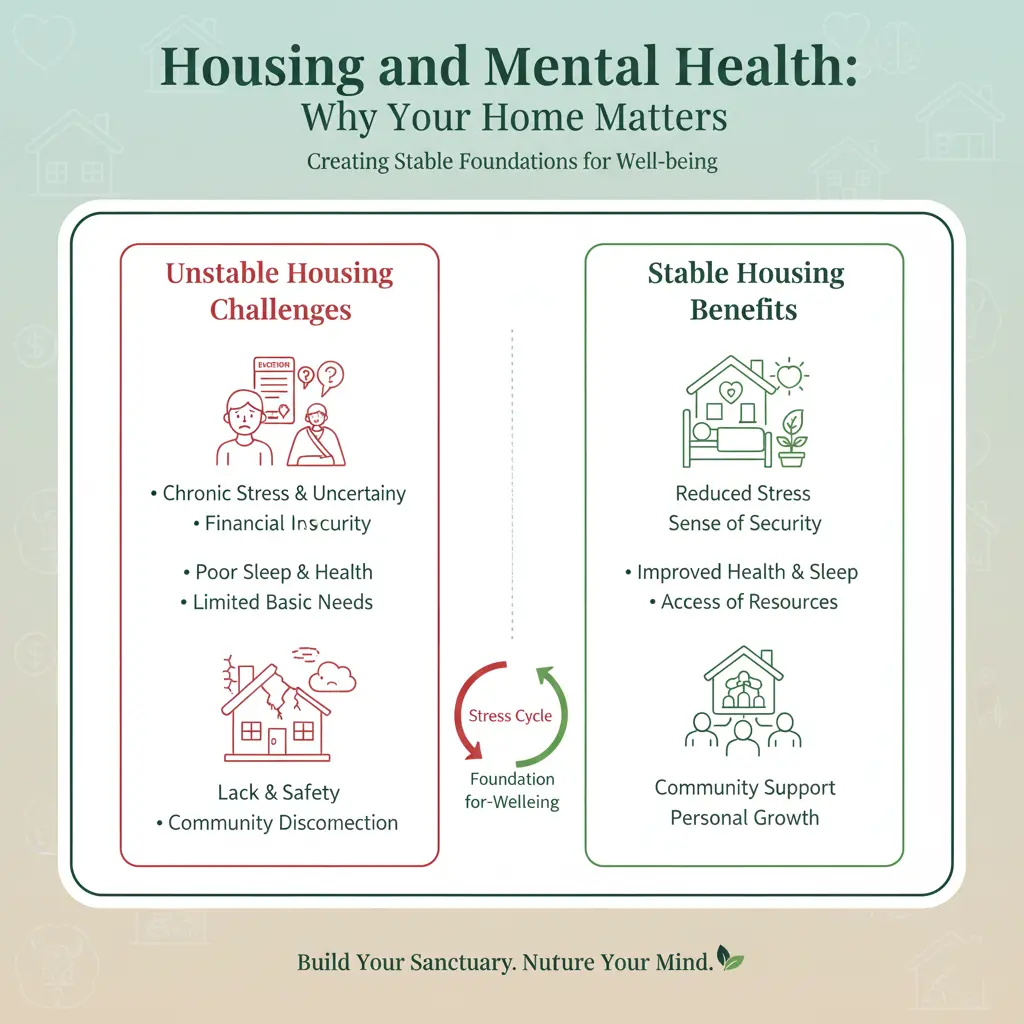
Our home is more than just a roof over our heads; it is the foundation of our well-being. Good quality, affordable, and safe housing is vital for maintaining good mental health. Conversely, poor housing conditions and housing insecurity are significant sources of stress, anxiety, and depression globally.
Understanding the link between housing and mental health is the first step toward advocating for better living conditions and finding the support you need.
How Housing Impacts Mental Health
Research consistently shows that housing problems can negatively affect mental well-being. A report by Shelter found that 1 in 5 people have experienced mental health issues due to housing problems.
Poor housing can impact you in several ways:
Financial Stress: Worrying about rent, mortgages, or eviction is a major cause of anxiety.
Physical Conditions: Damp, mold, and cold can lead to physical illnesses, which in turn strain mental health.
Overcrowding: Lack of privacy and space can strain relationships and increase irritability.
Unsafe Neighborhoods: Living in an area with high crime or antisocial behavior keeps the body in a constant state of alert (“fight or flight”), leading to chronic stress.
Homelessness and Mental Health
The relationship between homelessness and mental health is often a “two-way street.” Severe mental health problems can make it difficult to maintain a tenancy, leading to homelessness. Conversely, the trauma of being homeless—or the fear of becoming homeless—can trigger or worsen mental health conditions.
Globally, the “Housing First” approach is gaining recognition. This model prioritizes getting people into permanent housing without preconditions (like sobriety), acknowledging that a stable home is the necessary starting point for recovery.
Finding Support and Suitable Housing
If you are struggling with housing issues, you do not have to face them alone. Support is available depending on your location and needs.
Types of Specialized Housing
Supported Housing: Accommodation where care and support are provided as a package.
Crisis Houses: Short-term, intensive support environments that serve as an alternative to hospital admission.
Therapeutic Communities: Group living environments where residents support each other’s recovery.
Global Resources
Habitat for Humanity (Global): Working in over 70 countries to help people build or improve a place they can call home.
Shelter (UK): The leading housing and homelessness charity in the UK.
HUD (USA): The U.S. Department of Housing and Urban Development offers resources for rental assistance and homelessness.
Citizens Advice (International): Provides free, confidential advice on housing rights and debt.
Coping with Housing Stress
While you may not be able to fix every housing issue immediately, there are small steps you can take to regain a sense of control:
Know Your Rights: Whether you rent or own, understanding your legal protections against eviction or disrepair is empowering.
Create a Sanctuary: Even in a small or shared space, try to declutter and create one corner that feels calm and yours.
Build Community: Getting to know your neighbors can increase your sense of safety and belonging.
Seek Advice Early: Don’t wait for a crisis. If you are falling behind on rent or bills, contact a debt advisor immediately.