
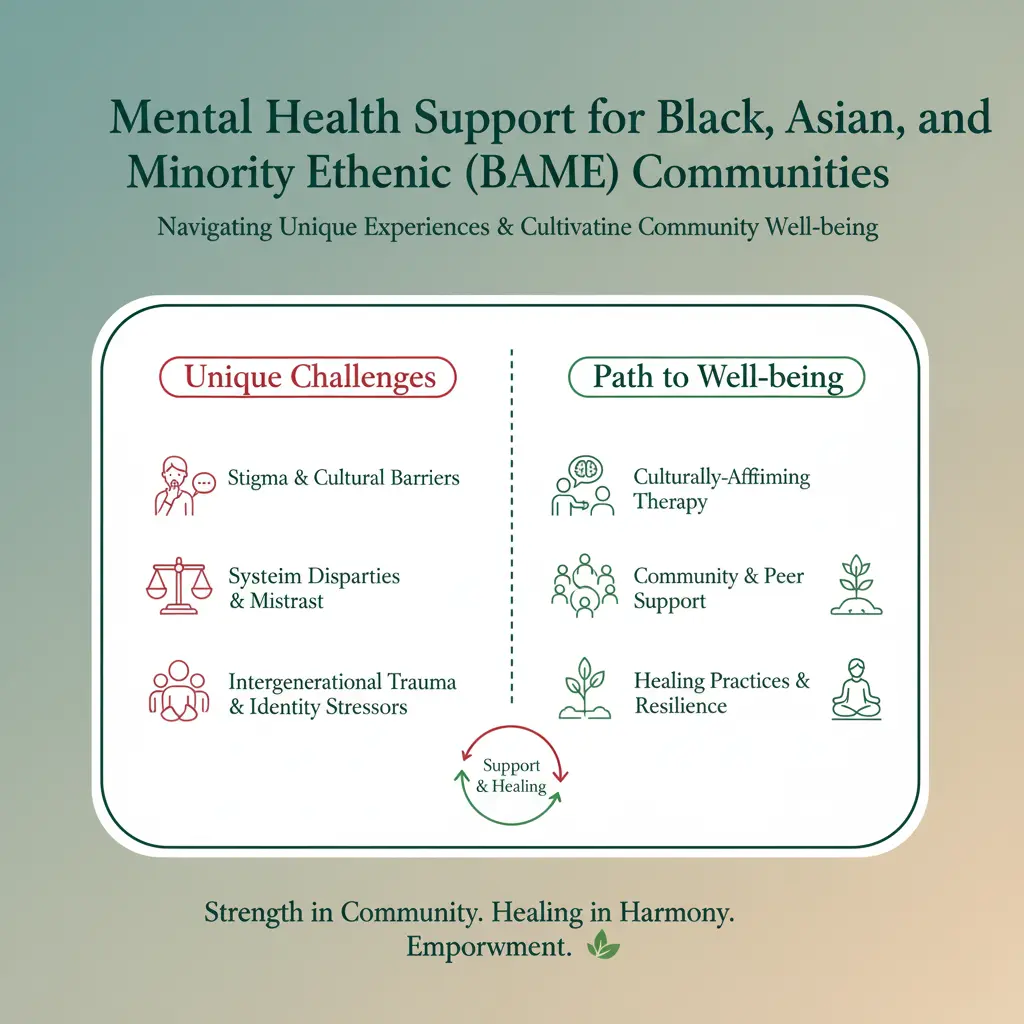
Mental Health Support for Black, Asian, and Minority Ethnic (BAME) Communities
Mental health belongs to everyone, regardless of their background. However, people from Black, Asian, and Minority Ethnic (BAME) communities often face unique challenges that can negatively impact their well-being. From the stress of racism and mental health stigma to barriers in accessing care, these inequalities mean that getting the right support is vital.
While the term “BAME” is widely used to describe diverse groups including people of African, Caribbean, Asian, and other ethnic heritages, it is important to recognize that every community and individual has distinct experiences and needs.
Are Mental Health Rates Different for BAME Communities?
Rates of mental ill-health vary significantly between different ethnic groups. While some groups report lower instances of certain conditions, others face disproportionately high risks due to systemic factors.
Statistics highlight these mental health inequalities:
Black men are more likely to have experienced a psychotic disorder in the past year compared to White men.
Black people are four times more likely to be detained under the Mental Health Act than White people.
Refugees and asylum seekers face higher rates of depression, anxiety, and PTSD compared to the general population.
Older South Asian women are identified as an at-risk group for suicide.
Conversely, some data suggests that suicidal thoughts and self-harm are less common in Asian people than in White people, and reported mental ill-health is lower among Chinese people. However, these statistics may not reveal the full picture, as stigma and a lack of data can lead to under-reporting.
Factors Affecting Mental Health in Minority Ethnic Groups
Beyond the life stresses that affect everyone, individuals from racialised communities often contend with specific burdens that damage their mental health.
Racism and Discrimination
Experiencing racism—whether through subtle “micro-aggressions” or explicit abuse—is a significant source of trauma. Research shows that exposure to racism increases the likelihood of developing depression and psychosis. It affects not just mental health, but overall physical health and safety.
Social and Economic Inequality
Systemic disadvantages often place minority communities in challenging socioeconomic situations. Poverty, housing insecurity, and unemployment are major drivers of poor mental health, and these issues disproportionately affect minority ethnic groups.
Cultural Stigma
How mental health is viewed varies by culture. In some communities, mental illness is seen as shameful or strictly a private family matter. This cultural stigma can prevent people from speaking out or seeking help until they reach a crisis point.
Barriers to Accessing Mental Health Services
Everyone has the right to healthcare, but the reality is that many people from minority backgrounds face hurdles when trying to get support. Common barriers include:
Language barriers that make communicating distress difficult.
Lack of diversity among healthcare professionals.
Fear of discrimination or not being understood by White therapists.
Distrust of formal healthcare systems due to historical or personal negative experiences.
Financial costs associated with private counselling or therapy.
Finding the Right Support
If you are struggling, remember that you have a right to support that respects your culture and identity. Many organizations specialize in mental health support for BAME communities, offering culturally sensitive care.
Where to Find Help
-
The Black, African and Asian Therapy Network: Offers a directory of therapists from Black, African, Asian, and Caribbean heritage.
-
Black Minds Matter: Connects Black individuals with free therapy from Black professionals.
-
Taraki: Works with Punjabi communities to provide mental health education and support spaces.
-
Sikh Your Mind: Provides culturally sensitive support for Sikh and Punjabi individuals.
-
Sharing Voices: Based in Bradford, this group supports various minority ethnic communities with self-help groups.
If you need immediate help, your local GP is a good starting point, or you can search for local peer support groups through the Hub of Hope.