
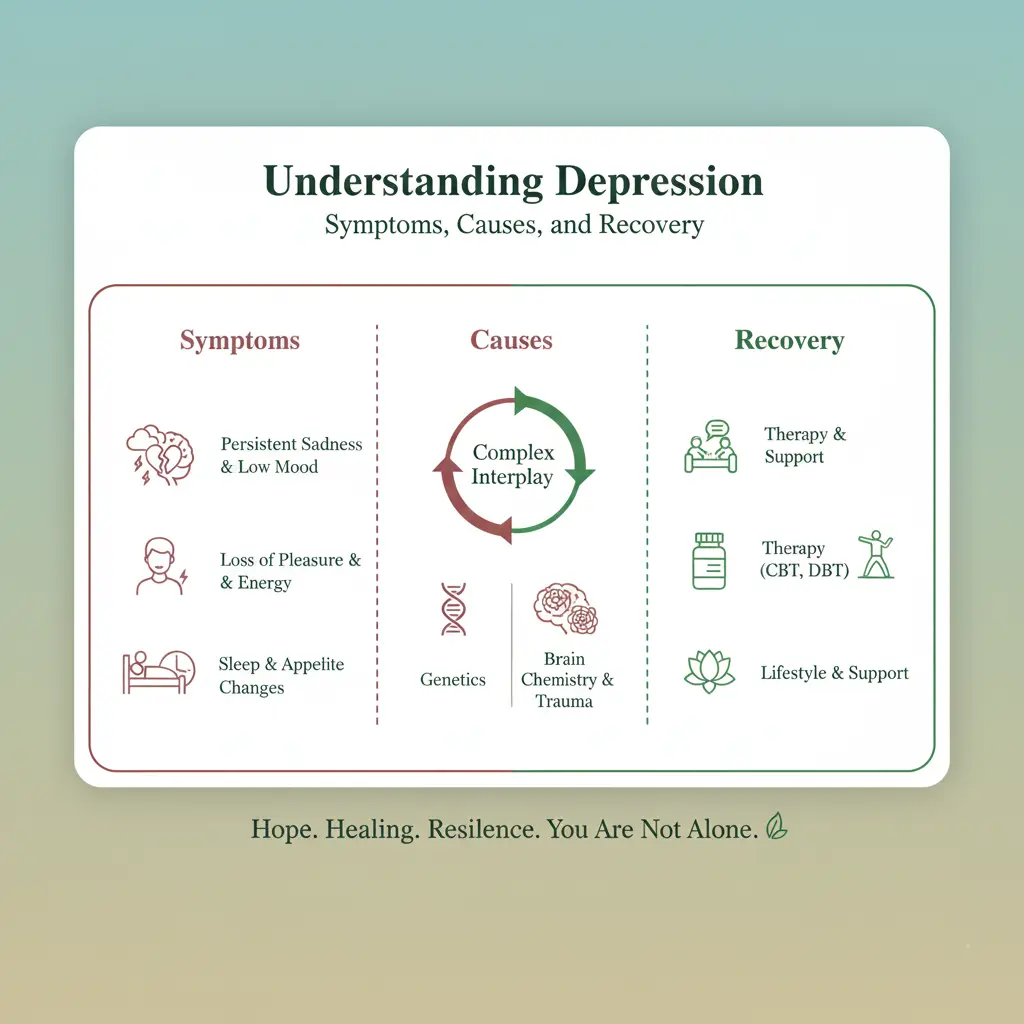
Depression is more than just feeling a little down for a few days. It is a persistent and complex mental health condition that affects your thoughts, feelings, and daily life. Whether mild or severe, the impact can be profound, making even simple tasks feel overwhelming.
You are not alone in this experience. In the UK, millions of people face depression each year. The good news is that with the right depression treatment and support, recovery is entirely possible.
What Are the Symptoms of Depression?
The signs of depression can vary from person to person, affecting the mind, body, and behavior. Recognizing these depression symptoms early is the first step toward feeling better.
Emotional Signs:
Feeling consistently sad, tearful, or empty.
A sense of hopelessness or worthlessness.
Feeling anxious, irritable, or restless.
Lacking confidence or self-esteem.
Having suicidal thoughts or urges to self-harm.
Physical Signs:
Constant tiredness or lack of energy.
Moving or speaking more slowly than usual.
Changes in appetite or weight.
Unexplained aches and pains.
Disrupted sleep (insomnia or oversleeping).
Behavioral Signs:
Withdrawing from friends and family.
Avoiding social events or hobbies you used to enjoy.
Difficulty concentrating or making decisions at work.
Different Types of Depression
Not all depression looks the same. Doctors may diagnose specific types based on the severity and timing of symptoms:
Dysthymia: A persistent, mild form of depression that lasts for several years.
Seasonal Affective Disorder (SAD): Depression that comes and goes with the seasons, usually worsening in winter.
Postnatal Depression: Depression that occurs in parents after having a baby.
Prenatal Depression: Depression experienced during pregnancy.
What Causes Depression?
There is rarely a single cause. Instead, a combination of factors often triggers the condition:
Life Events: Trauma, bereavement, divorce, or job loss.
Health Issues: Chronic physical illness or pain.
Childhood Experiences: Past neglect or abuse.
Genetics: A family history of mental health problems.
Getting Help and Treatment Options
If you suspect you are depressed, speaking to your GP is the most important step. They can help you explore various treatment paths tailored to your needs.
1. Talking Therapies
Therapies like Cognitive Behavioural Therapy (CBT) are highly effective. They help you understand your thoughts and feelings, offering practical tools to change negative patterns. You can often self-refer to NHS psychological therapies in England.
2. Medication
Antidepressants can help lift your mood and ease symptoms. They are often used alongside therapy. Finding the right medication might take time, so ongoing communication with your doctor is key.
3. Self-Help Strategies
Small lifestyle changes can make a big difference in managing your mental health:
Stay Active: Regular exercise boosts natural “feel-good” chemicals in the brain.
Connect with Others: Sharing your feelings with trusted friends reduces isolation.
Practice Mindfulness: Being present in the moment can reduce stress and anxiety.
Spend Time in Nature: Fresh air and green spaces are proven to improve mood.
Where to Find Support
For more detailed guidance and immediate support, trusted organizations are ready to help:
Mind: Offers extensive resources and local support groups.
NHS – Clinical Depression: comprehensive medical advice and treatment pathways.
Samaritans: Call 116 123 for free, confidential support 24/7 if you are in distress.